May, 28, 2014
Lung experts from all over the world meet in Hannover
They came to Hannover from Belgium, Canada, France, Israel, the Netherlands, Spain, Switzerland, the UK, the USA and from all over Germany: just under 50 international scientists and another 300 domestic researchers met at Herrenhausen Palace from 8 to 10 May 2014 to discuss the latest approaches to research and therapy of lung diseases.
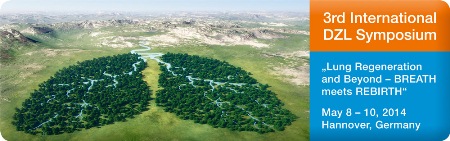
The main focus of the symposium entitled ‘Lung Regeneration and Beyond: BREATH meets REBIRTH’ was on innovative techniques from different areas – transplantation, artificial organs, tissue engineering, regenerative therapies and stem cell research. BREATH (Biomedical Research in Endstage and Obstructive Lung Disease), the Hannover-based network of the German Center for Lung Research (DZL) and the REBIRTH Cluster of Excellence (From Regenerative Biology to Reconstructive Therapy) were the event’s joint hosts. In the field of lung research, both research alliances benefit from synergistic effects in their priority research areas, and from close collaboration between the scientists involved. Moreover, the research themes explored by BREATH complement the other organ systems investigated in REBIRTH, namely the heart, liver and blood, as the underlying mechanisms of organ development and regeneration in patients with chronic disease are based on similar signalling pathways.
The former summer residence of the Guelphs, only recently rebuilt – the exterior a faithful reconstruction of the original and the interior a modern conference centre – provided those attending with an outstanding setting for the talks, discussions and poster sessions. The stand-out aspect of the symposium was the well-balanced mixture of domestic and international experts, promising young scientists and experienced researchers, along with clinicians and specialists engaged in basic research.
The translation of scientific findings into clinical practice or industrial applications was a central theme of the symposium. “This event gave not only scientists, but also politicians, industry representatives and technology transfer officers the opportunity to share their own particular needs in order to get closer to our common goal – the translation of research into clinical treatments for the benefit of patients,” says Professor Axel Haverich, director of Hannover Medical School’s (MHH) Department of Cardiac, Thoracic, Transplantation and Vascular Surgery (HTTG), coordinator of the REBIRTH Cluster of Excellence and member of the BREATH Executive Board. “The findings in regenerative medicine and forms of reconstructive therapy presented at the symposium are very encouraging, but there are still many unanswered questions requiring investigation,” added Professor Tobias Welte, director of MHH’s Department of Pneumology, the BREATH network and DZL.
The research network CARPuD (Cellular Approaches for Rare Pulmonary Diseases) and the Lower Saxony Centre for Biomedical Engineering, Implant Research and Development (NIFE) were also involved in the symposium. “The notion of discussing not only pulmonary research but also providing an opportunity to explore research themes that straddle different organ systems, such as gene and cell therapy, proved successful at both the poster session and during the brief oral presentations: it was standing-room only!” reported Tobias Cantz, head of the REBIRTH unit on Translational Hepatology and Stem Cell Biology, and chair of the ‘Liver’ and ‘CARPuD’ sessions.
The collected abstracts of all oral and poster presentations at the symposium are published in a volume entitled ‘3rd International DZL Symposium: Lung Regeneration and Beyond – BREATH meets REBIRTH’, ISBN 978-3-00-045880-4. The poster abstracts will also appear in the June issue of the medical journal Pneumologie.
Text: Camilla Mosel/REBIRTH, BREATH/AZ